Verify by read-back
The single rule that shaped mcidrac’s write paths:
A step is not “ok” because the BMC accepted the request. It is “ok” because the state read back correct.
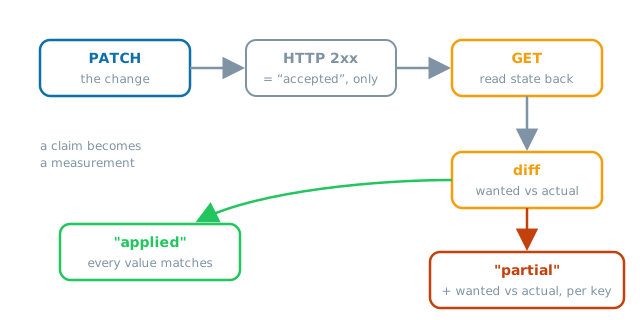
The gap between accepted and applied
Section titled “The gap between accepted and applied”BMCs are full of ways for a 200 to lie. Dell validates BIOS values when
the config job runs during POST — not when you PATCH them — so a typo’d
enum “succeeds” now and fails minutes later. A PATCH to several iDRAC
attributes where one is read-only returns 200 with the complaint
tucked into @Message.ExtendedInfo (at the top level of the body,
a different place than errors use). InsertMedia can accept a URL the
iDRAC then fails to stream. An eject can be acknowledged and not
happen.
For a human clicking a UI, these gaps are annoying. For an LLM operator that chains the next destructive action on the word “applied,” they’re dangerous — which is why every mcidrac mutation closes the gap with a read-back:
idrac_attributes_setre-reads the attributes and diffs — the result isappliedonly if every value matches, otherwisepartialwith wanted-vs-actualidrac_vmedia_mountconfirmsInsertedis true before saying “inserted (verified)”; unmount confirms the device is emptyidrac_boot_to_isore-reads the OEM boot attributes and refuses to issue the reset until they verify
Never lose the ledger
Section titled “Never lose the ledger”Multi-step workflows have a second failure mode: step 3 fails after
steps 1–2 changed the world, and the error message describes only step
3. idrac_boot_to_iso ejects media, mounts new media, sets boot
attributes, and reboots — if the boot-attribute PATCH fails, the caller
must know the old media is already gone and a new ISO is already
mounted.
So failures carry the ledger: every completed step, in the error
itself, with a warning that the BMC is in a partial state and what to
inspect before retrying. The same principle keeps idrac_bios_set
honest when the optional reboot fails — the config job it created is
still queued and will fire at the next boot, so the tool says exactly
that instead of letting the reboot error swallow the job ID.
Where this came from
Section titled “Where this came from”The first implementation returned “ok” when HTTP calls succeeded, like most tooling does. A rigorous failure-mode review (in the Margaret Hamilton tradition: verify state, then report it) found the gap in nearly every mutating tool, and the fix became the house rule. The behavioral simulator in the test harness exists largely to keep it enforced — its fake iDRAC rejects read-only attributes and refuses double-mounts precisely so the tests fail if a tool ever stops checking.